 植物Plants
十大功劳Chinese Mahonia
Mahonia fortunei
叶缘带刺的常绿灌木,冬日开黄花An evergreen shrub with spiny leaf edges and yellow flowers in winter
常绿灌木,叶子是羽状复叶,每片小叶边缘都长着尖锐的硬刺,摸上去扎手——这是它最可靠的识别特征,也是它常被种作绿篱的原因。An evergreen shrub with pinnate (feather-like) compound leaves. Each leaflet is edged with sharp, stiff spines that prick when touched — its most reliable identifying feature, and the reason it is often planted as a hedge.
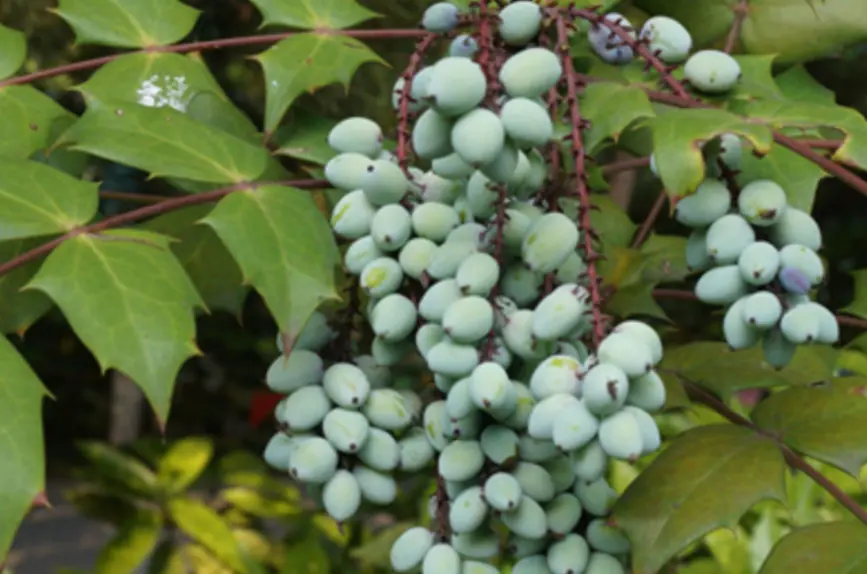
名字听起来夸张,来源却很实在:它的根、茎、叶在传统上都作药用,被认为「功劳」多,故称十大功劳。秋冬时节抽出成串下垂的黄色小花,在少花的季节里格外显眼,之后结出被白粉的蓝黑色浆果。The Chinese name, “ten great merits”, sounds grand but has a practical origin: its roots, stems and leaves have all been used in traditional medicine. In autumn and winter it produces drooping strings of small yellow flowers that stand out in a season with few blooms, followed by blue-black berries dusted with white bloom.
辨识要点How to identify it
- 01羽状复叶,小叶硬革质、边缘具尖刺Pinnate leaves; leaflets stiff and leathery with spiny edges
- 02黄色小花成串下垂Small yellow flowers in drooping clusters
- 03浆果蓝黑色,表面覆一层白粉Blue-black berries covered with a white, powdery bloom
物种档案Species profile
- 科属Family
- 小檗科 十大功劳属Barberry family · Mahonia
- 株型Height
- 株高 0.5–2 米0.5–2 m tall
- 园中何处Where to look
- 林下、绿篱、建筑背阴处Under trees, in hedges, on the shady side of buildings
- 观察时节When to look
- 秋冬开花,冬春结果Flowers in autumn and winter, fruits in winter and spring